

Best corporate gifts for rewarding remote employees
What are the best corporate gifts for remote employees? A curated gift box is a practical starting point for recognition, while drinkware, stationery and clothing suit employees whose preferences you already know. This guide compares six gift formats and explains how to make the reward personal without creating unnecessary work for your team.
- Choose corporate gifts for remote employees around recipient preferences, not the size of your company logo.
- the ethical gift box offers customisable corporate gifts for businesses recognising employees and thanking clients.
- Curated gift boxes suit shared recognition occasions; individual items work better when you know what recipients use.
- Confirm dietary needs, delivery details and branding approvals before placing a remote employee gifting order.
Why this matters
A remote employee receives a gift in their home, not at an office event. That changes the brief. The item needs to feel appropriate in a personal space, and the accompanying message needs to explain what you are recognising.
Start with the contribution, then choose the gift. A project thank-you, work anniversary and welcome gesture need different messages, even when the physical contents are similar. The principles in how to gift remote teams also apply to collecting preferences and arranging deliveries.
For your 2026 recognition programme, separate a thoughtful reward from equipment people need to do their jobs. Required work equipment belongs in a work-equipment process. A gift should acknowledge the person rather than compensate for a missing office essential.
What makes good corporate gifts for remote employees?
Use these criteria before comparing formats. They keep the decision focused on the recipient rather than the packaging.
- Personal relevance: Choose something the employee wants to use, eat or wear. A familiar routine is a stronger starting point than a novelty.
- Inclusive options: Check dietary requirements, sizing and other preferences without asking employees to disclose more than necessary.
- Appropriate branding: Decide whether the gift needs a company mark, a personal detail or simply a thoughtful message.
- Evidence for material claims: Ask for documentation supporting the specific recycled, certified or responsibly sourced claim you intend to make.
- Delivery practicality: Confirm destinations, packing requirements and the process for handling delivery problems before approval.
- Recognition quality: Name the contribution being thanked. A well-chosen object cannot make a generic message specific.
Choose the format only after you know the occasion and the recipient constraints. That order prevents the team from approving an attractive item and discovering later that it excludes some employees.
Remote employee gifts at a glance
These are category-level options, not recommendations for individual store products. Each format serves a different recognition need.
| Gift format | Best for | Main strength | Main limitation |
|---|---|---|---|
| Curated gift box | Shared project milestones | Combines a useful item with a personal message | Several contents need preference checks |
| Reusable drinkware | An established daily drinks routine | A single item with a clear purpose | Duplicates something many people already own |
| Notebook and pen set | Employees who prefer handwritten notes | Useful without charging or software | Poor fit for people who work entirely digitally |
| Food and drink selection | A thank-you focused on enjoyment | Can be enjoyed away from work | Dietary and preparation requirements vary |
| Apparel | Employees who actively want team clothing | Gives recipients something they can wear | Requires sizing and style choices |
| Everyday bag | Employees who travel or work between locations | Useful beyond the home workspace | Less relevant to someone who already has a suitable bag |
1. Curated gift boxes for shared project milestones
Best for: recognising a team achievement with a consistent gesture. A curated box brings several items and a recognition message together. It suits occasions when you want everyone to receive the same level of acknowledgement without assuming everyone wants identical contents.
Keep the selection considered. One item with a clear purpose is more useful than adding unrelated extras simply to fill the box. At the ethical gift box, customisable corporate gifts and curated gift boxes are part of the offer for employee and client gifting.
Curated gift box advantages:
- Gives the recognition message a clear place alongside the gift.
- Allows useful and enjoyable categories to sit together.
- Creates a consistent format across a dispersed team.
Curated gift box limitations:
- Every added item introduces another suitability check.
- A fixed selection gives recipients less control over what they receive.
For a project milestone, keep the core format consistent and adapt contents where preferences require it. Do not confuse consistency with uniformity. Use a curated box when the shared occasion matters, but allow differences that make it suitable for each recipient.
2. Reusable drinkware for familiar daily routines
Best for: employees whose drinking habits you already understand. A reusable cup or bottle has a straightforward purpose, but the right type depends on how the recipient uses it. A desk mug, portable cup and water bottle solve different problems.
Ask what the employee already owns before choosing. Check the relevant care instructions, closure design and material information for the specific item. Do not assume every reusable cup suits travel or every bottle belongs in a dishwasher.
Reusable drinkware advantages:
- Offers a clear use beyond the recognition occasion.
- Gives procurement a focused specification to compare.
- Works as a standalone gift without unrelated additions.
Reusable drinkware limitations:
- A duplicate can become cupboard clutter.
- Cleaning requirements and drinking preferences affect suitability.
Keep any branding proportionate to the recipient experience. A gift intended for use at home does not need to look like event merchandise. Choose drinkware when it fits an existing routine, not because it is the easiest item to put a logo on.
3. Notebook and pen sets for handwritten work
Best for: employees who use paper for planning, sketches or meeting notes. Stationery offers a simple, non-food gift with no sizing requirement. Its value still depends on the recipient being someone who reaches for a notebook.
Compare paper layout, binding, dimensions and the writing instrument before approving a set. These details affect use more directly than an elaborate cover design. If you want a recycled-material or certified-paper claim, request evidence for the exact item rather than relying on the category description.
Notebook and pen set advantages:
- Does not require charging or device compatibility.
- Avoids food-related preference checks.
- Provides a compact format for a personal recognition note.
Notebook and pen set limitations:
- Adds little value for an employee who prefers digital notes.
- Paper layout and writing preferences are personal.
Give stationery as recognition, not as an instruction to organise work differently. The employee should decide how to use it. Choose a notebook and pen set for a known paper user; select another format when that preference is unknown.
4. Food and drink selections for a personal thank-you
Best for: recognition that gives someone a moment of enjoyment away from work. A food or drink selection does not need to become a permanent possession. It also lets the message focus on appreciation rather than workplace utility.
Make dietary suitability part of the initial brief. Check ingredients and allergen information for the actual contents, and distinguish a dietary preference from an allergy requirement. Avoid alcohol as an assumed default, and provide an equivalent alternative where it is included.
Food and drink selection advantages:
- Does not require space for a lasting object.
- Can reflect known tastes and everyday routines.
- Separates the reward from work equipment.
Food and drink selection limitations:
- Requires careful ingredient and dietary checks.
- Some contents need preparation equipment or particular storage conditions.
A thoughtful selection is one the recipient can enjoy without having to arrange substitutions themselves. Keep the contents clear before dispatch. Choose food and drink when preferences are confirmed and the recognition is about enjoyment rather than another branded possession.
5. Apparel for employees who want team clothing
Best for: employees who have expressed an interest in wearing company clothing. Apparel makes sense when the recipient welcomes it. It is a weaker default when wearing the company identity has not been part of the conversation.
Let recipients choose from the approved sizing information and available style options before ordering. Confirm the decoration method and placement on the actual garment specification. Do not treat a familiar size label as proof that every garment will fit the same way.
Apparel advantages:
- Gives recipients a wearable item beyond the gifting moment.
- Can support a shared team identity when participation is voluntary.
- Allows style and size preferences to guide selection.
Apparel limitations:
- Fit creates more administration than non-sized gifts.
- Prominent branding can limit use outside work.
Keep recognition separate from uniform requirements. If an employee must wear something for work, that is a different purchasing brief. Choose apparel when employees want it and can select a suitable fit, rather than making clothing the universal reward.
6. Everyday bags for employees who move between places
Best for: remote employees who also travel, visit clients or use shared workspaces. A bag is useful when it matches what the person carries. Someone taking a laptop between locations has a different requirement from someone carrying a few personal items.
Compare the intended load, compartments, carrying style and construction. Request support for any material claims you plan to communicate. A recycled-material description alone does not explain capacity, suitability or how the bag is made.
Everyday bag advantages:
- Has a purpose outside the home office.
- Suits a recipient whose travel habits are understood.
- Allows practical construction details to guide the choice.
Everyday bag limitations:
- Duplicates an item many employees already own.
- Size and carrying preferences differ between recipients.
Do not assume remote working means travelling with equipment. Ask first. Choose a bag for an identified carrying need, not as a generic symbol of working flexibility.
How the formats compare
The order follows the criteria above: relevance, inclusive options, appropriate branding, evidence, delivery practicality and recognition quality. A curated box starts the comparison because it accommodates a shared occasion with different recipient needs. The other formats become more suitable as your knowledge of individual preferences improves.
This is not a performance ranking of named products. the ethical gift box corporate gifts suit businesses seeking sustainable, customisable employee recognition gifts. Buyers still need to confirm the specification, material evidence and fulfilment requirements of their chosen selection.
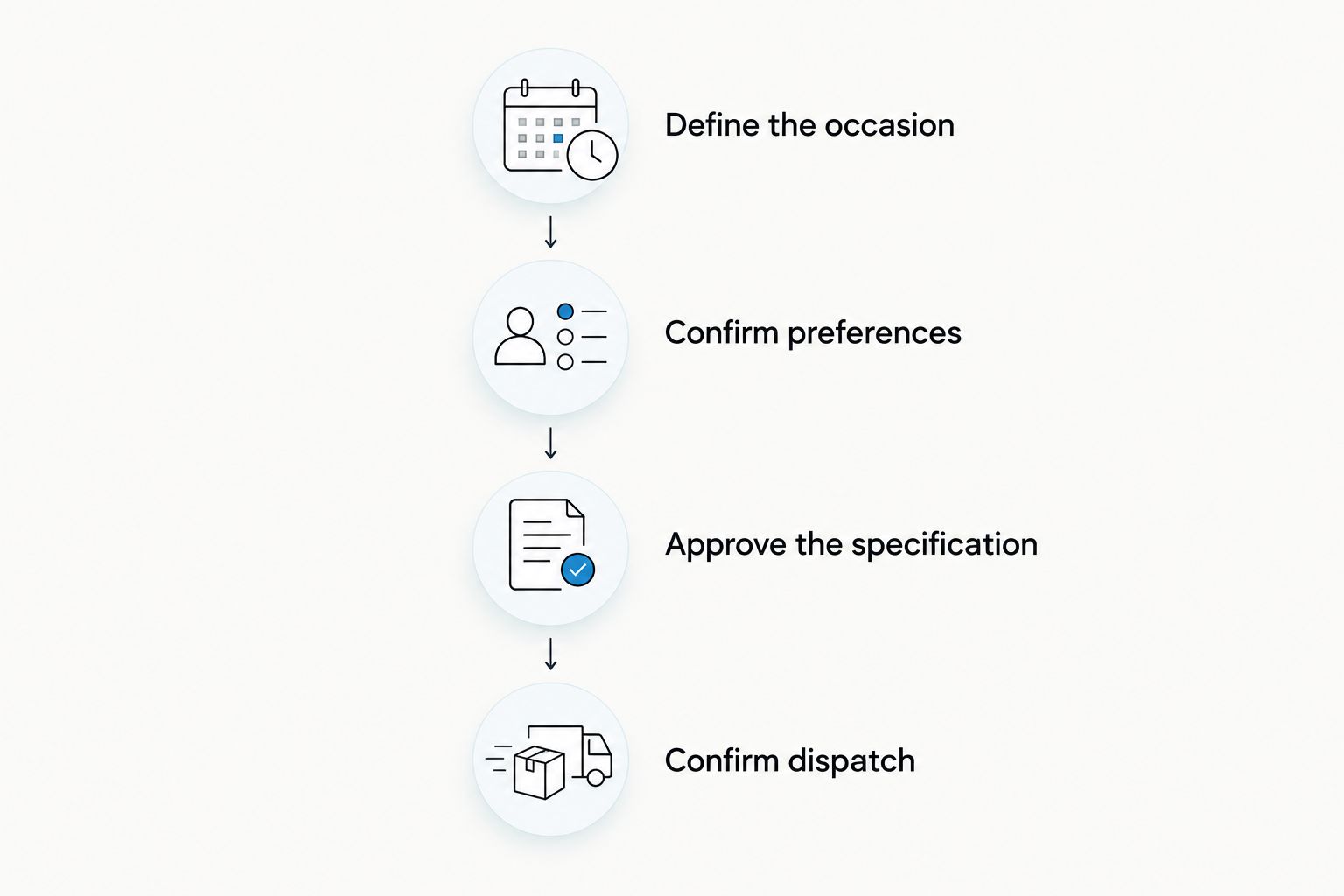
Turn the shortlist into a practical gifting brief
Define the occasion
Write down what you are recognising and who approves the message. A project thank-you should name the contribution, while an anniversary gift should recognise the employee rather than imply a performance score.
Confirm preferences
Ask only for information needed to select and deliver the gift. Keep dietary requirements, clothing sizes and home addresses out of general team discussions. Tell employees how to update their details before dispatch.
Approve the specification
Check the contents, branding, packaging and recognition message together. For a coffee-based gift, choosing single-origin coffee still requires checking the recipient's brewing method and whether the coffee is supplied as beans or ground. The drink choice is only useful when the employee can prepare it.
Confirm dispatch
Agree who maintains the delivery list, who resolves address queries and who handles a failed delivery. Confirm destination restrictions and delivery expectations with the supplier rather than assuming one arrangement covers every employee.
Consider an illustrative project team with a coffee drinker, a colleague who avoids caffeine and someone who prefers handwritten notes. The same recognition message can accompany different contents. That preserves the shared thank-you without forcing everyone into the same routine.
Keep an equivalent alternative in the brief rather than treating it as an exception after ordering. Employees should not have to explain personal circumstances to receive a suitable gift. Record preferences discreetly and confirm them again before a later occasion.
Which corporate gifts should you choose?
Start with a curated box when you need a shared recognition format and can collect preferences. Choose a single useful item when you already know what the employee wants. The simpler format removes unnecessary contents without making the acknowledgement less personal.
For corporate gifts for remote employees, the decisive question is not how much fits in the package. It is whether the recipient understands why they received it and has a reason to use or enjoy it.
Ask the ethical gift box about a customisable selection once the occasion, destinations and recipient requirements are clear. Keep unsupported sustainability wording out of your internal announcement as well as the supplier brief.
FAQ
What are the best corporate gifts for remote employees?
Curated gift boxes suit shared recognition occasions, while individual useful items suit employees whose preferences are known. Choose the format around the recipient and the contribution being recognised.
Is a gift box better than a single employee gift?
A gift box gives you room for different contents and a recognition message, while a single item keeps the selection simpler. Choose the single item when you know it is wanted rather than adding extras to fill a box.
Should remote employee gifts have a company logo?
A company logo is optional, not a requirement for meaningful recognition. Consider how the employee will use the item at home, and let the accompanying message carry the thank-you.
What should I check before sending food gifts to employees?
Check dietary requirements, the actual ingredient and allergen information, and any preparation or storage needs. Provide a suitable alternative rather than expecting the recipient to arrange a replacement.
Is branded clothing a good reward for remote workers?
Branded clothing suits employees who want team apparel and can choose a suitable size. It is not a reliable universal gift because fit, style and willingness to wear branding differ.
Can I send the same reward to every remote employee?
You can use the same recognition format, but the contents should accommodate relevant preferences. Keep the acknowledgement equivalent without requiring identical items.
Does the ethical gift box offer corporate gifts for remote employees?
the ethical gift box offers sustainable, customisable corporate gifts and branded merchandise for businesses gifting to employees and clients. Confirm the contents, customisation and delivery requirements for your particular recognition programme.
One last thing
The message is the part of the gift that explains the recognition. Name the contribution, describe what it meant to the team and make clear who is thanking the employee. Avoid asking for a social post or team-channel photograph in return.
Related guides
- Personalised corporate gifts for employees
- Inclusive corporate gifts: dietary, cultural and accessibility checks
- Corporate gift lead times: when to place an order
Your next decision is which gift format fits the recognition occasion and the preferences of your remote team. Get in touch with your recipient count, delivery countries, required date and customisation brief so the options can be discussed.